

Medical warning
This article is purely informative and educational. The information presented is based on scientific traditions and studies, but does not replace a medical opinion or follow-up by a qualified natural health practitioner. Always consult a naturopath, an experienced plant therapist or a health professional before incorporating new plants into your routine, especially in case of existing medical conditions, pregnancy or medication.
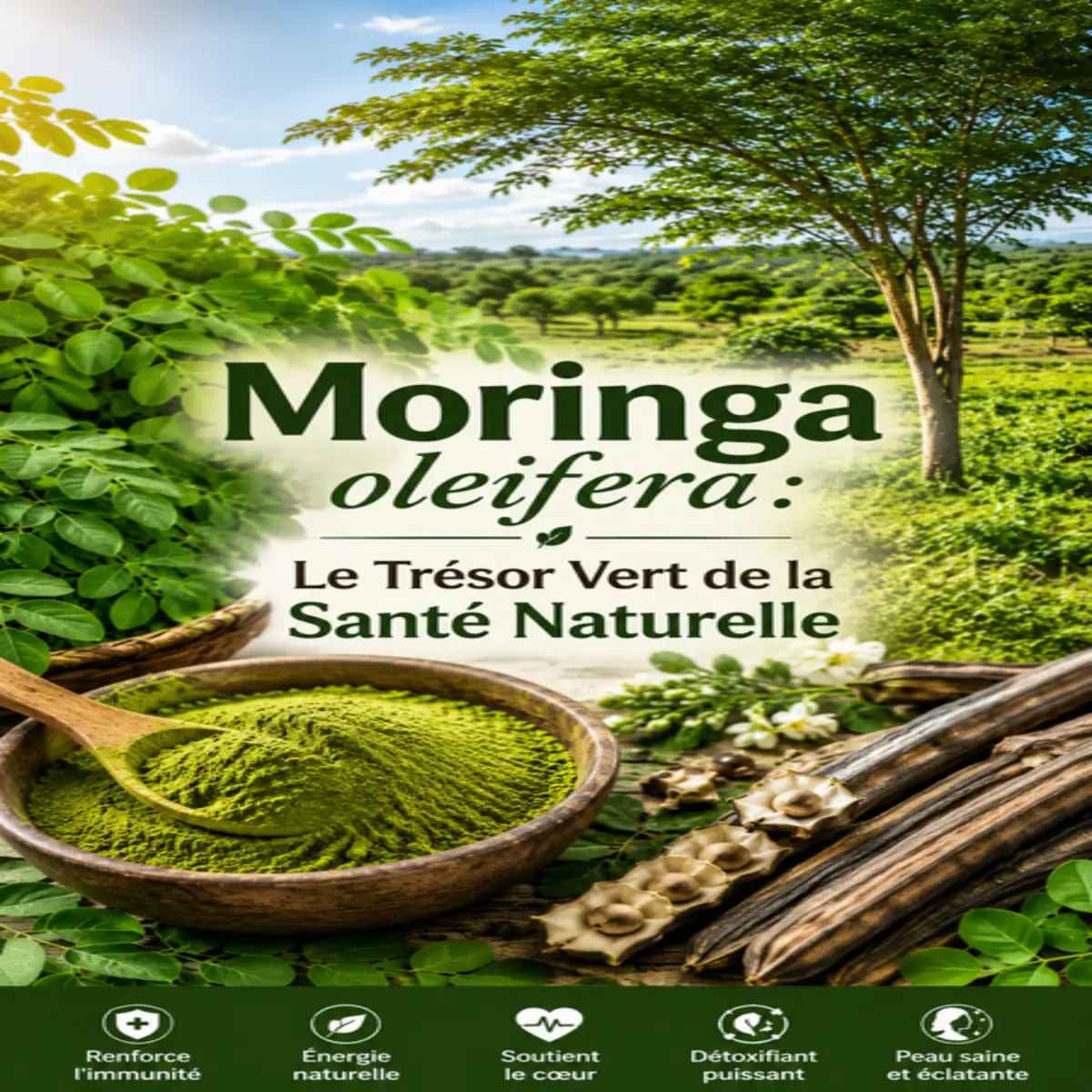
Moringa oleifera: The African Miracle Plant with Exceptional Benefits for Your Health
Imagine a plant that can feed millions of people in the arid regions of Africa while providing valuable support for your daily vitality. According to the World Health Organization, more than 80% of the African population uses traditional medicine for primary care. The Moringa oleifera is particularly distinguished: this robust tree, nicknamed « miracle tree » or « plant life », attracts increasing attention from researchers and natural health enthusiasts around the world.
The African Pharmacopoeia is full of ancestral treasures. Moringa embodies this richness: its leaves, seeds, roots and barks have been used for centuries to strengthen the body, combat malnutrition and accompany various daily ailments. In this article you will discover its history, its active principles, current scientific evidence, practical tips for use and much more. Prepare to explore a powerful natural ally, always respecting a complementary and responsible approach.
Context: An Ancestral Plant at the Heart of African Culture
Moringa oleifera (scientific name: Moringa oleifera Lam., Moringaceae family) is a fast growing tropical tree native to northern India, but has been perfectly acclimatized across the African continent, including Senegal, Nigeria, Cameroon, Chad and Ethiopia. Its edible leaves resemble those of spinach, while its long, thin pods remind of green beans.
In African traditions, Moringa has occupied a central place for generations. Rural communities use it to combat hunger and nutritional deficiencies. Pregnant women and children benefit particularly from it for their intake of vitamins and minerals. Historically, it symbolizes resilience: it grows in poor soils, resists drought and offers an abundant food and medicinal resource all year round.
Modern scientific research is increasingly valid for these uses. Hundreds of studies published in recent years explore its antioxidant, anti-inflammatory, antidiabetic and immunomodulatory properties. Yet, as with any medicinal plant, enlightened and framed use remains essential. We strongly encourage you to consult a natural health practitioner or naturopath to adapt these tips to your personal situation.
The Benefits of Moringa oleifera in African Phytotherapy
Geographical Origin, Cultural Context and Botanical Description
Moringa spreads in the tropical and subtropical areas of Africa and Asia. In West and Central Africa, it is an integral part of family gardens and agroforestry systems. People regard it as a « tree of life » able to transform communities by improving nutrition and health.
Botanically, it is a tree of up to 10-12 meters, with a straight trunk, hanging branches and pennate composite leaves. It blooms with small fragrant white flowers and produces pods rich in seeds.
Active Principles and Mechanisms for Action
Moringa leaves are full of nutrients: complete proteins (up to 30% dry weight), vitamins (A, C, E, group B), minerals (calcium, iron, potassium, magnesium) and powerful antioxidants such as flavonoids (quercetin), polyphenols and isothiocyanates. These compounds act by neutralizing free radicals, modulating inflammation and supporting metabolic functions.
Comparison of nutrients (per 100 g dried leaves):
- Calcium: ~2000 mg (more than milk)
- Iron: high, bioavailable
- Vitamin C: Supports immunity
- Proteins: complete plant source
Scientific Evidence and Traditional Uses
Many studies confirm the benefits. A review of 2025 highlights its potential as nutraceutical for metabolic, cardiovascular and neuroprotective health. Clinical trials have shown that 8 g of leaf powder per day for 40 days can help reduce fasting blood glucose and lipids in people with diabetes or dyslipidemic conditions.
In African herbal medicine, it is traditionally used for:
- Strengthen immunity and fight infections
- Supporting diabetes and hypertension management
- Combat malnutrition and anaemia
- Support lactation in lactating women
Recent meta-analysis indicates a significant increase in breast milk volume with moderate supplementation.
Preparation Modes, Traditional Dosages and Operating Mode
Fresh leaves: Add them to soups, sauces or salads (as in Senegal in the « thieboudian » Reviewed). Leaf powder: 1 to 2 teaspoons a day (about 5-10 g) in a smoothie, juice or herbal tea. Start with small doses. Tisane: Infuse 1-2 spoons of dried leaves in hot water for 5-10 minutes. Seeds: Used with caution, often to purify water or for external use.
Suggested Infographic: Simple steps to prepare a tea or smoothie with Moringa (with recommended dosages).
Precautions for Employment and Counter-Indications
Moringa is generally well tolerated, but:
- Avoid roots and bark for internal use (may contain toxic alkaloids).
- Pregnant women should consult a professional (some parts may stimulate the uterus).
- Possible interactions with diabetes or thyroid medicines.
- Always start with low doses to observe tolerance.
Suggested individual photo: Fresh leaves of Moringa with legend: « Nutrient-rich leaves, based on many traditional African recipes. »
Practical Tips for Integrating Moringa into the Daily
You can obtain quality Moringa from reliable sources: organic cooperatives in Africa (Senegal, Burkina Faso), or brands certified in Europe and online respecting organic standards. Prefer powder from cold dried leaves to preserve nutrients.
Retention: The powder is kept in a jar sealed against light and moisture until 1-2 years. Fresh leaves eat quickly or freeze.
Easily integrate it:
- Add a pinch to your morning porridge.
- Prepare one « green juice » with apple, ginger and Moringa.
- Use fresh leaves in your traditional African dishes.
The importance of medical follow-up remains paramount. A naturopath can help you customize your cure according to your needs (energy, immunity, weight management, etc.).
Suggested illustration: Simple recipes table incorporating Moringa.
FAQS
Can Moringa really replace medical treatment? No. It is an excellent nutritional and phytotherapeutic supplement, but must be part of a comprehensive approach under professional supervision.
What is the recommended daily dose for an adult? Usually 5 to 10 g of leaf powder per day, divided into 1-2 doses. Adapt with a practitioner.
Does Moringa help to lose weight? Its nutritional and antioxidant properties can support healthy metabolism as part of a balanced diet and physical activity, but it is not a « Fat burner » miracle.
Is it suitable for children? Yes, often used against malnutrition, but always after advice from a health professional adapted to the child's age.
Where to find quality Moringa in France or Africa? Look for organic certifications, traceability and laboratory tests. Focus on African short circuits whenever possible.
Conclusion
Moringa oleifera embodies the strength and wisdom of traditional African medicine: a nutritious, accessible and powerful plant that continues to inspire modern science. By integrating wisely, you can enrich your physical, mental well-being and even contribute to the valorization of ancestral knowledge.
We encourage you to further explore the richness of African herbal medicine, always with caution and professional support. Share this article with your loved ones, leave us your experiences in comments and subscribe for more content on natural health!
About the author
HUGUES ADJE : Expert in African herbal medicine, certified naturopath, Founder and regular contributor on yahusante.com, passionate about the valorization of traditional evidence-based remedies.
Scientific sources (selection):
- Clinical studies on antidiabetic and lipid effects (Darwin Nutrition, 2025).
- Comprehensive Review 2025 on Nutraceutical Properties (MDPI).
- WHO work on traditional African medicine.
- Nutrition and lactation publications (recent meta-analysis).
- African ethnobotanical reviews on Moringa oleifera.


