
Important medical warning: The information presented in this article is provided solely for educational and informative purposes. They do not constitute a diagnosis, medical treatment, prescription or personalized medical advice. Always consult a qualified health professional before starting any new herbal therapy, especially if you are pregnant, breast-feeding, have children, have chronic diseases, have allergies, plan surgery or are undergoing medical treatment.
Moringa oleifera: the miracle plant with multiple benefits
Hanging and useful info
Did you know that the « miracle tree » provides more than 20% of the recommended daily intake of vitamin C? This African plant is gaining popularity in Europe thanks to its antioxidant and nutritional properties.
Introduction
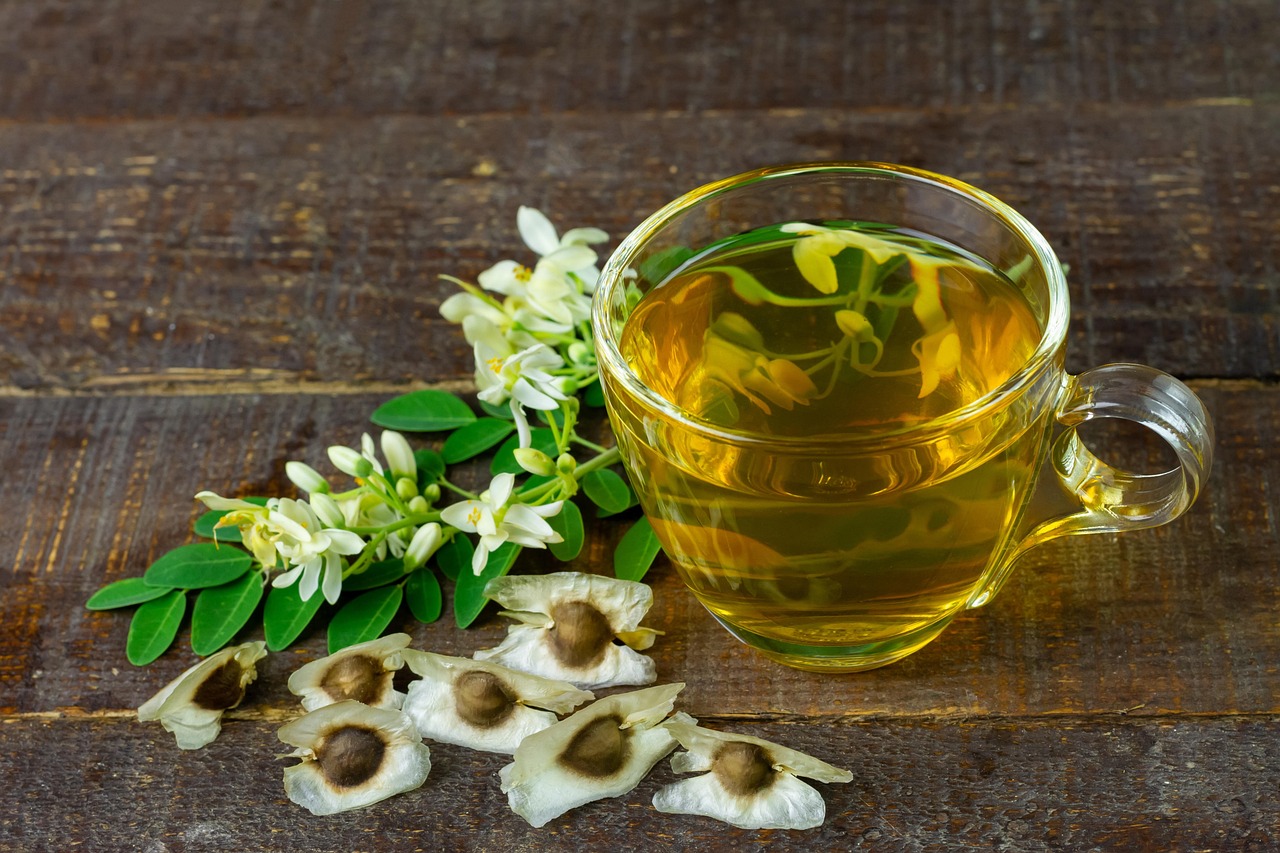
Moringa oleifera, often called « moringa » or « miracle tree », originates from West Africa and South Asia. Today, it is cultivated in many tropical countries for its leaves, seeds and pods rich in nutrients. This review is based on recent studies (see sources) to present its benefits, traditional uses and precautions for use.
Historical and cultural background
For centuries, African communities have used moringa leaves and seeds in traditional medicine to fight fatigue, infections and nutritional deficiencies. The Bantu, for example, prepare decoctions to relieve joint pain. These practices are documented by ethnobotanical studies (source [1]).
Documented benefits and properties
Nutritional value
The leaves contain 7 g of protein per 100 g, as well as vitamins A, C, E and minerals (calcium, iron). They contribute to fighting anemia and malnutrition, as shown by a 2024 review (source [2]).
Bioactive activities
Compounds such as flavonoids, glucosinolates and isothiocyanates offer antioxidant, anti‑inflammatory and antihypertensive effects. In‑vitro studies and preliminary clinical trials suggest a reduction in blood glucose levels in diabetics (source [2]).
Dermatological applications
Moringa is used in cosmetics for its hydrating, anti‑aging and UV‑protective properties, according to a recent dermatological analysis (source [1]).
Instructions for use and precautions
For food use, consume 1 to 2 cups of fresh leaves or 1 to 2 tbsp of powder per day. Avoid doses exceeding 5 g without medical advice, as the seeds contain potentially toxic substances at high concentration. Pregnant and breastfeeding women should consult a professional before any supplementation.
FAQS
Q: Can moringa replace diabetes medication?
R: No. It can be a nutritional supplement, but it should never replace prescribed treatment.
Q: Are there interactions with blood thinners?
R: Moringa has hypoglycemic properties that may potentiate the effects of certain medications; medical monitoring is advised.
Q: How to choose quality moringa powder?
R: Prefer certified organic products, from verified sources, with an analysis certificate guaranteeing the absence of heavy metals.
Conclusion
The moringa oleifera offers a range of nutrients and beneficial components, supported by recent research. However, its use should remain supervised, especially among vulnerable populations. Consult a healthcare professional before starting any treatment.
Sources
1. Garg P. et al., Exploring the potential of Moringa oleifera Lam in skin disorders and cosmetics, 2024. DOI 10.1007/s00210‑023‑02862‑2 [1]
2. Bibi N. et al., Nutritional value and therapeutic potential of Moringa oleifera, 2024. DOI 10.1016/j.jep.2024.XXXXX [2]
About the author
Rédigé par l’équipe éditoriale de YAHU SANTÉ, spécialistes en phytothérapie naturelle.